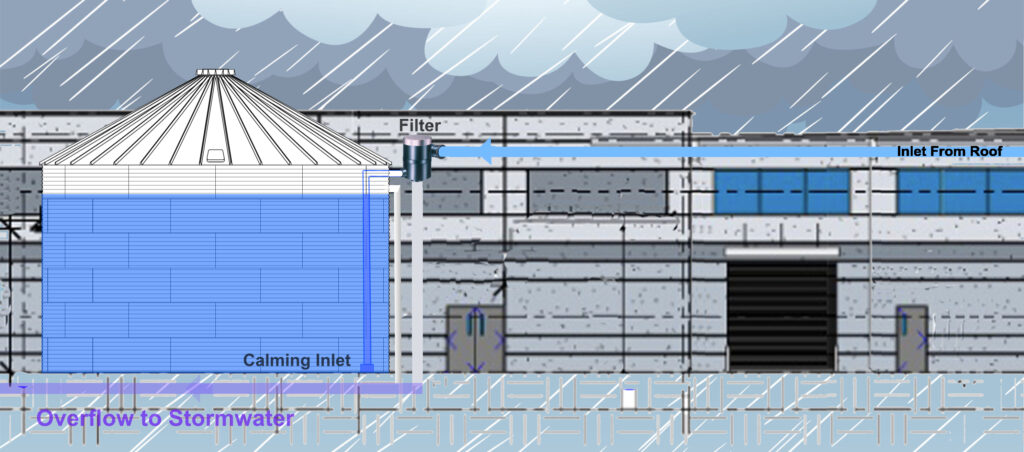
Rainwater Harvesting
Rainwater harvesting is the collection, storage, and use of rainwater for beneficial purposes rather than allowing all of it to become runoff.
Once collected, rainwater can be used for a variety of applications, including irrigation, toilet flushing, laundry, cleaning, fountains, and other commercial and non-potable uses. Even though it may be potable when captured with appropriate treatment and regulatory compliance, harvested rainwater can also be used for potable purposes.
As stormwater requirements for new construction become more stringent, rainwater harvesting provides an opportunity to capture and manage rainfall on site while reducing demand for municipal water. A properly designed system can therefore address two needs at the same time: managing stormwater and reducing potable-water consumption.
Why Collect Rainwater?
Rainwater is water before it hits the ground. When it hits the ground, it becomes stormwater. Rainwater is not greywater. Greywater comes from bathroom sinks, showers, and laundry. Rainwater is particularly well suited for irrigation because it does not contain the chlorine and other treatment chemicals used in municipal potable-water treatment. Properly collected rainwater is generally soft and has relatively low concentrations of dissolved minerals and salts, making it useful for irrigation and other applications where high mineral content can be undesirable. Plants thrive under irrigation with stored rainwater and may grow 20%-30% more using rainwater for irrigation.
Rainwater harvesting can also provide an alternative to using groundwater from wells. Groundwater is an important resource, but well water can contain minerals and other constituents that may require treatment before use. Groundwater withdrawals can also affect aquifers and connected surface-water systems, particularly when withdrawals are substantial or occur during drought conditions.
Unlike groundwater, which may take years or much longer to replenish depending on the aquifer, rainwater is continually replenished through the hydrologic cycle. Capturing a portion of rainfall for later use allows us to make better use of water that is already falling on the property.
Using rainwater can reduce reliance on both municipal water supplies and groundwater while providing a local, renewable water source for appropriate applications.